Routine 1 · Three-act task · Act 1
How many boxes of cookies fit in that trunk?
Too low
A number you know is too small
Too high
A number you know is too big
My estimate
…and the reason why
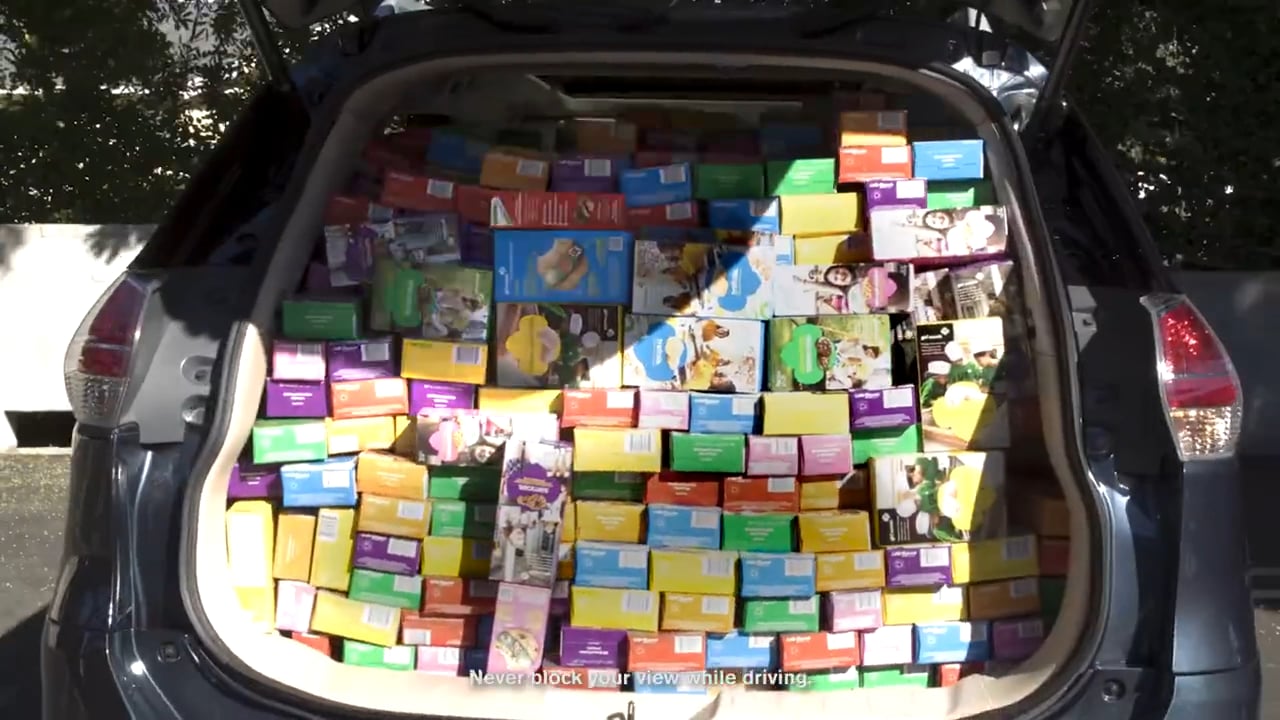
Play the 20-second video: vimeo.com/157324585 · Dan Meyer, CC-BY, from a Nissan ad
Act 2
What information would help?
Cargo space
39.3 cubic feet
One box of cookies
7 × 2.3 × 4.6 inches
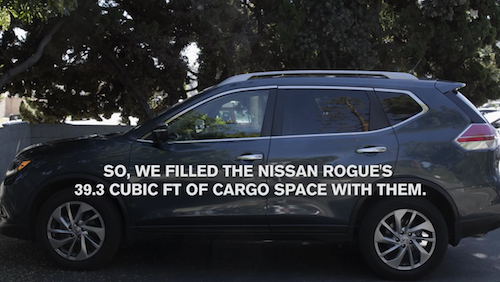
Measurements from Nissan and Dan Meyer's task notes
Four moves: predict before you press

loops.mathai
project.org
1 · Go bigger
Pick a number from 21 to 50. Predict, then run it.
2 · Pool the class data
Add each result at loops.mathaiproject.org. How many different loops?
3 · Change one thing
Move b to +1 and set max steps to 200. Now try 27.
4 · Conjecture
“I conjecture that…” and one “I wonder…”
ohiomathteacher.github.io/orbit-explorer · pairs, about 25 minutes · Open the class board: loops.mathaiproject.org/board ↗
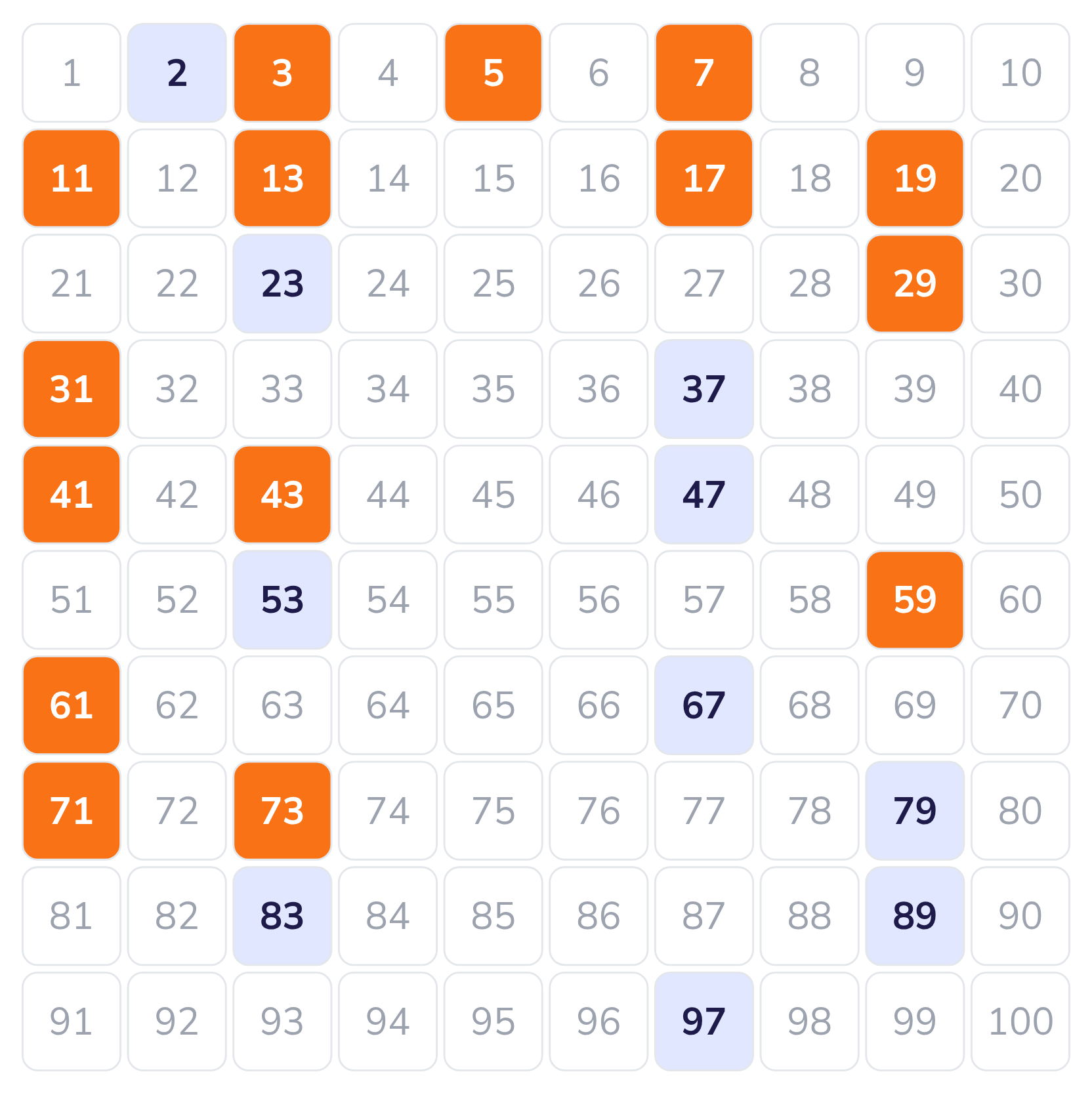
Primes · Grades 6–8
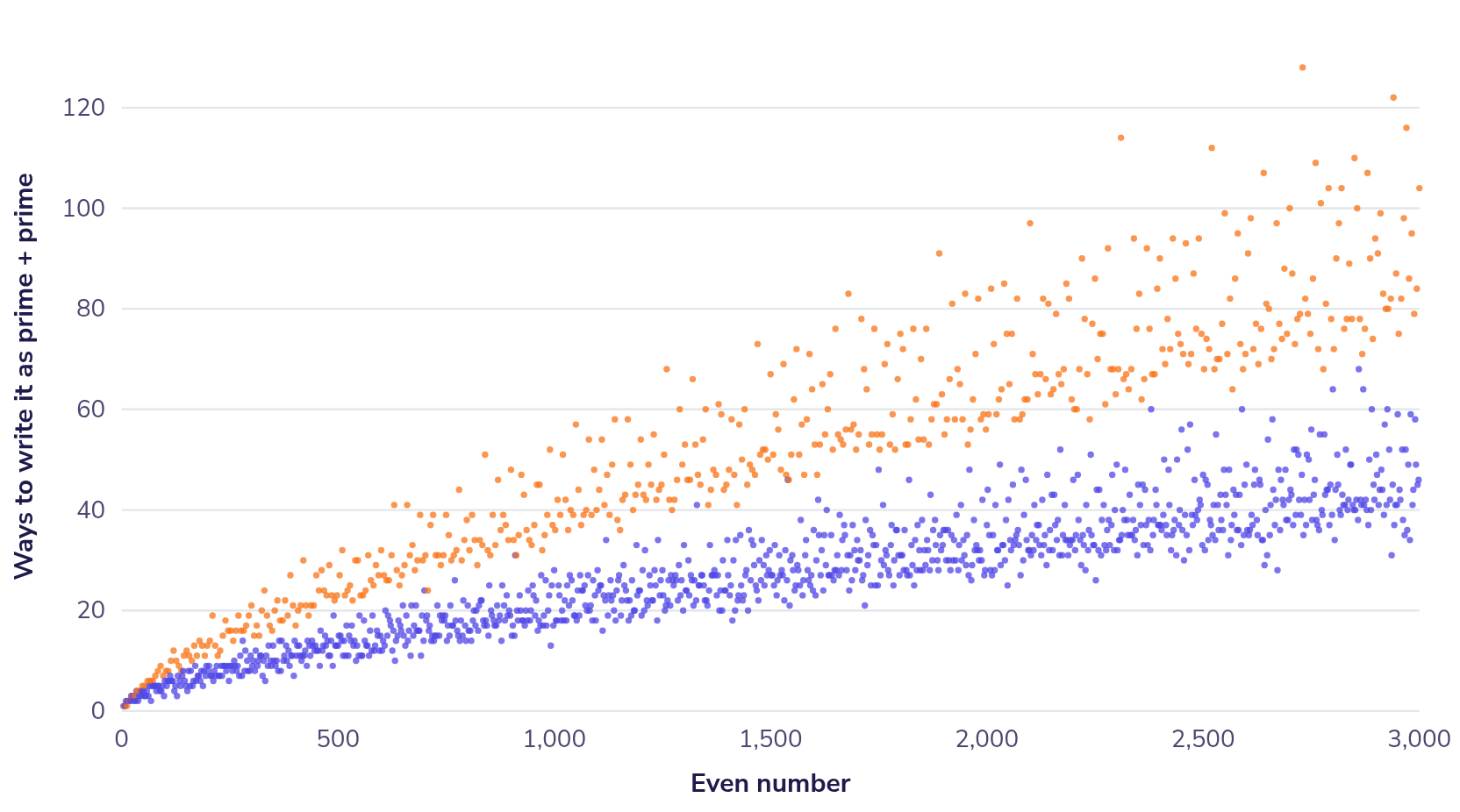
Goldbach's Conjecture
Every even number bigger than 2 can be made by adding two primes.
Ask your students
Which even numbers can be made the most ways?
Primes · Grades 6–8
Twin Prime Conjecture
Primes that are just 2 apart, like 11 and 13, keep showing up forever.
Ask your students
Look at the number between each twin pair: 4, 6, 12, 18, 30… What do you notice?
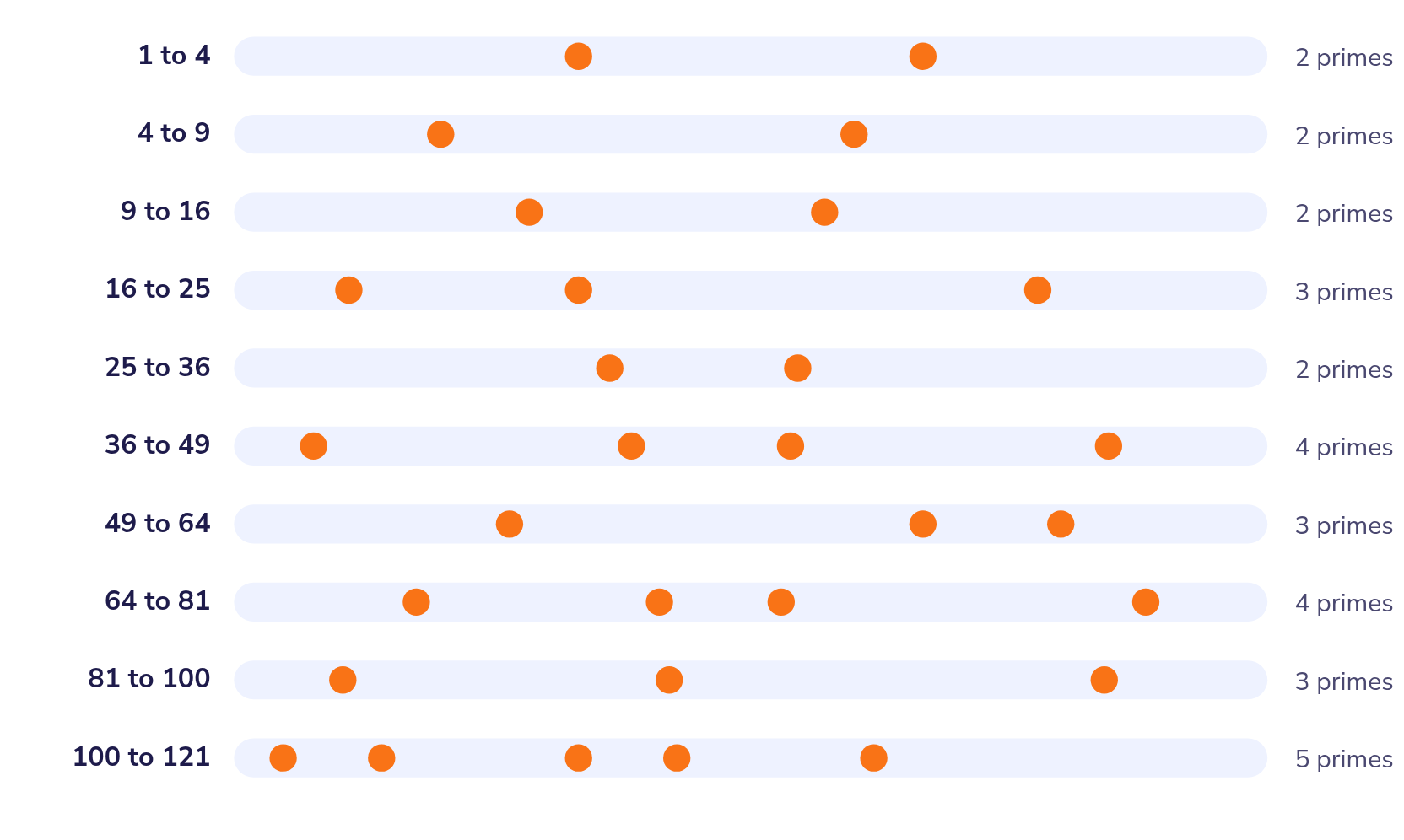
Primes and squares · Grades 7–9
Legendre's Conjecture
Between any two perfect squares that sit next to each other, there's always a prime.
Ask your students
Which strip has the fewest primes? Could one ever have none?
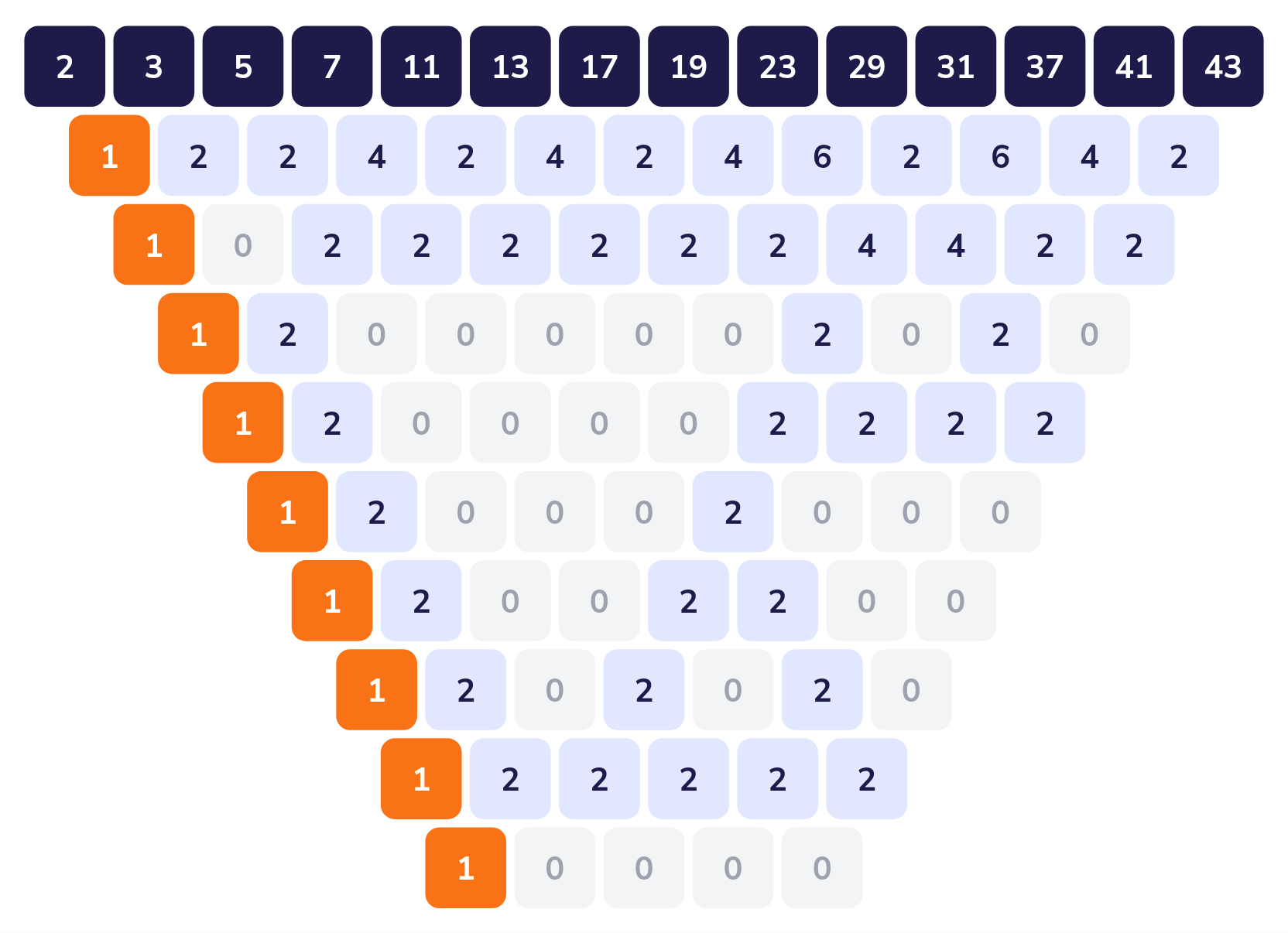
Primes and subtraction · Grades 5–8
Gilbreath's Conjecture
List the primes. Subtract neighbors to make a new row. Keep going. Every new row starts with 1.
Ask your students
Start with a different list, like 1, 2, 4, 8, 16. Does it still work?
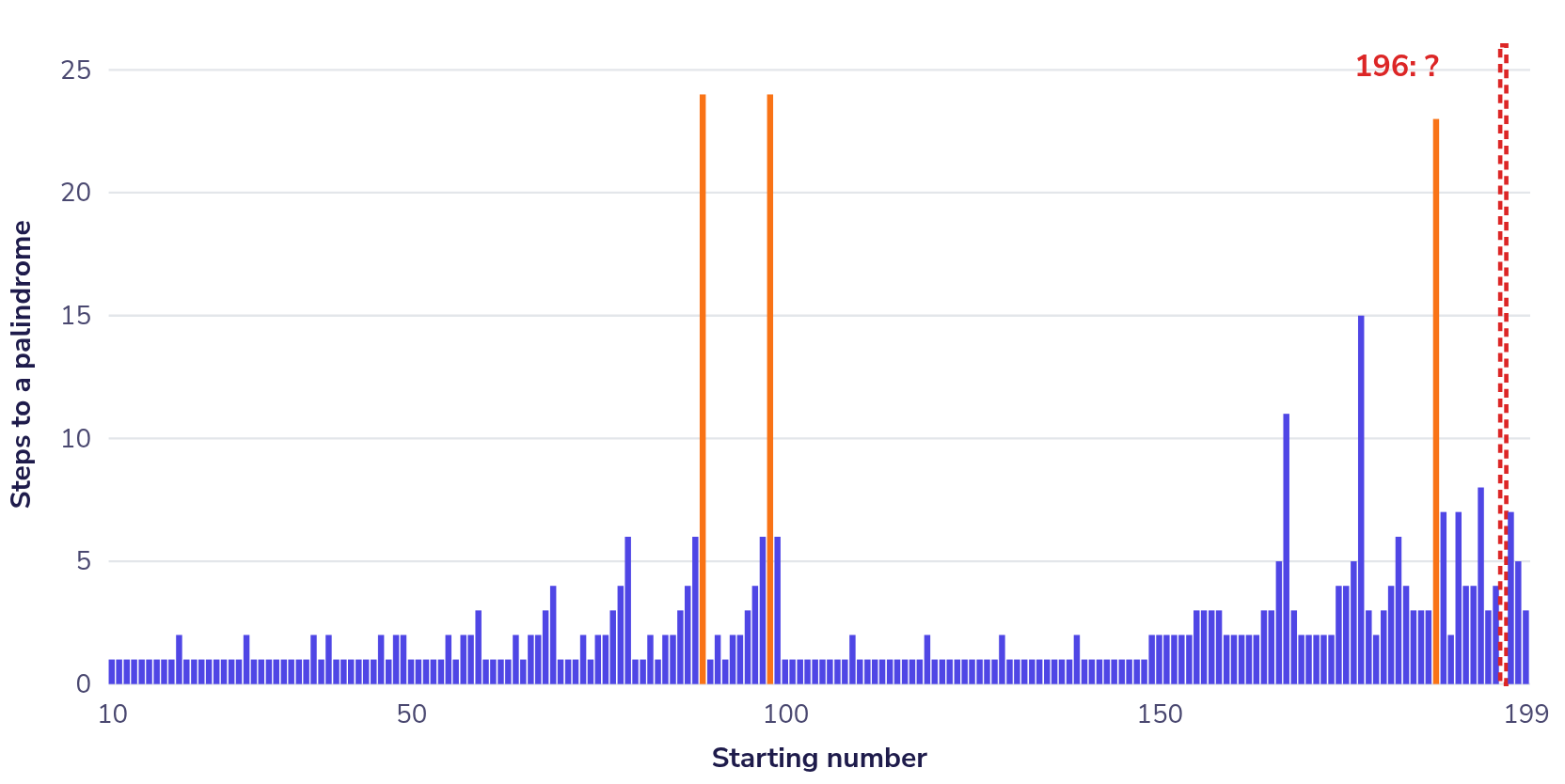
Addition · Grades 4–7
The 196 Problem
Reverse a number and add. Repeat until it reads the same both ways. Does 196 ever get there?
Ask your students
89 and 98 take the same number of steps. Why?
Fractions · Grades 5–8
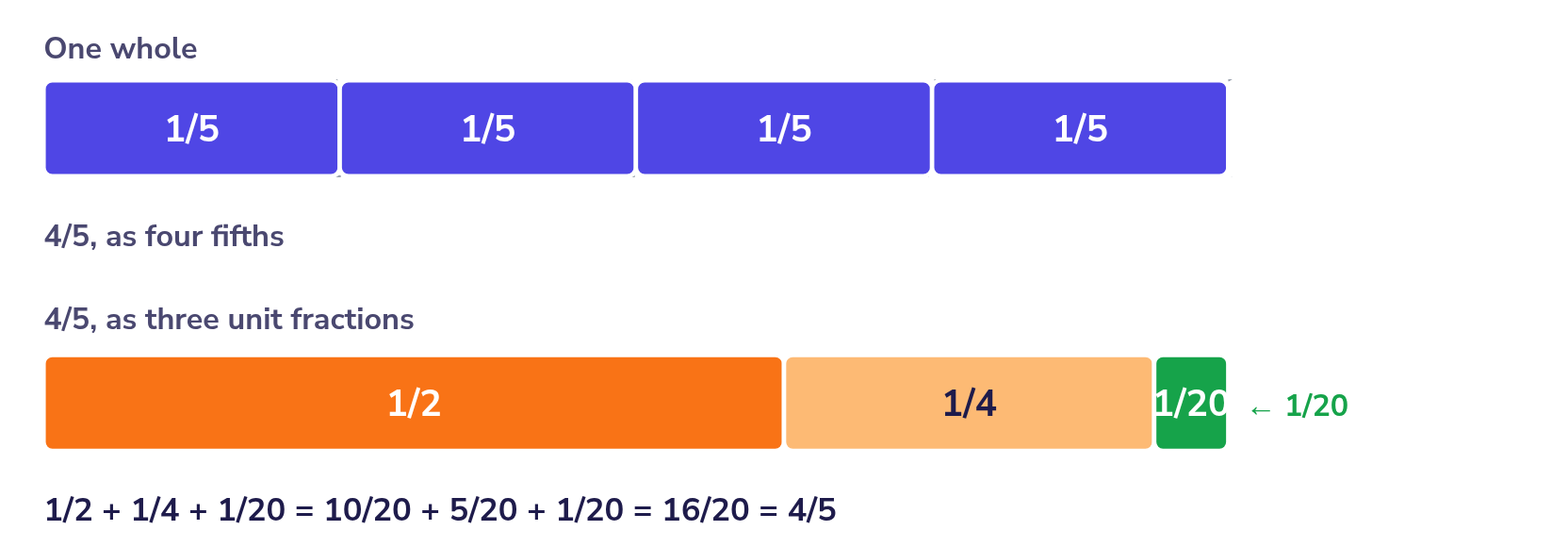
Erdős–Straus Conjecture
Any fraction with 4 on top can be split into three fractions with 1 on top.
Ask your students
Try 4/9. What's your first move?
Factors · Grades 5–8
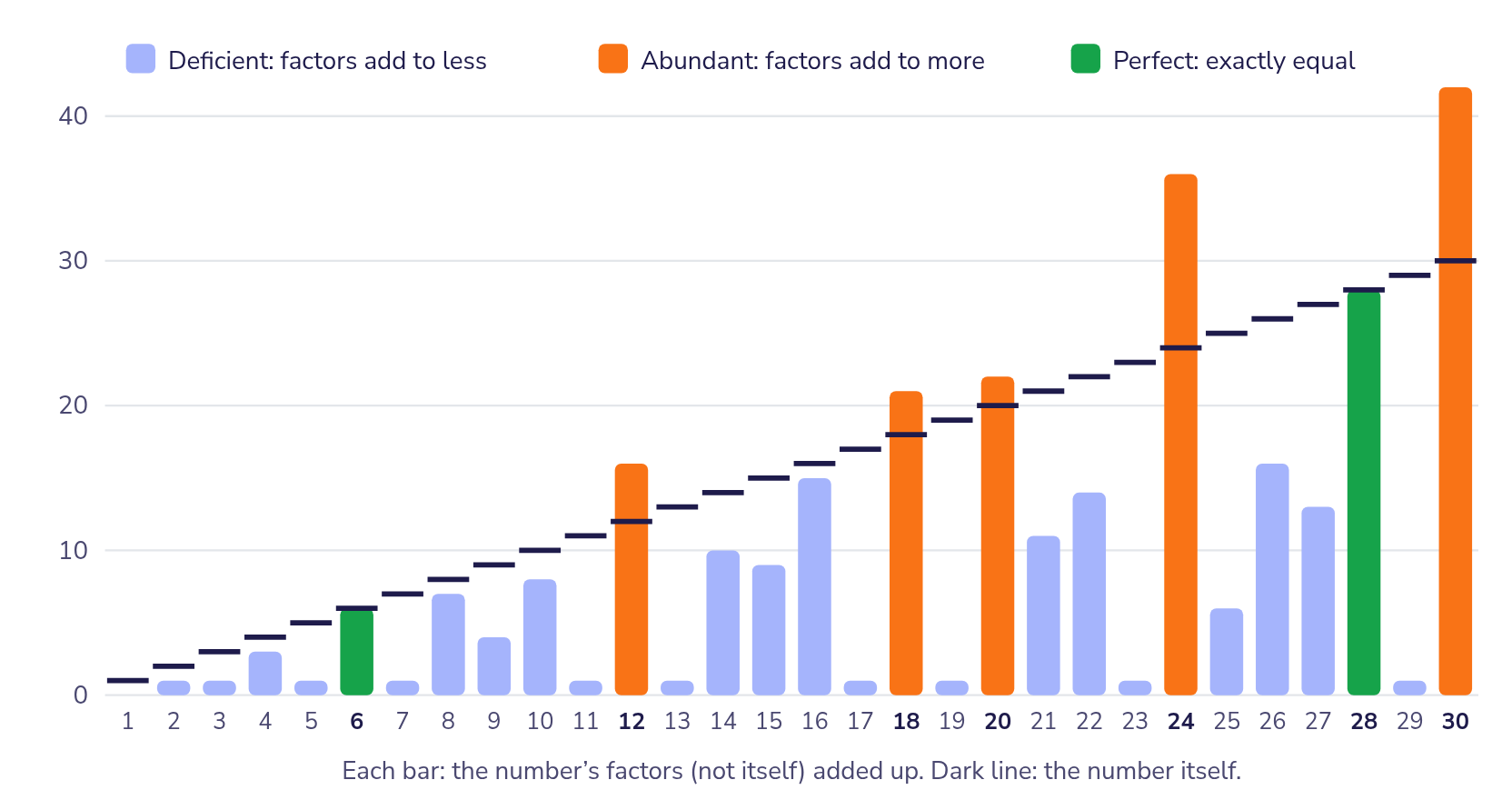
Odd Perfect Numbers
A number is perfect when its factors add up to it, like 6 = 1 + 2 + 3. Is any perfect number odd?
Ask your students
Can an odd number's factors ever add to more than it? Try 945.
Rates and motion · Grades 7–10
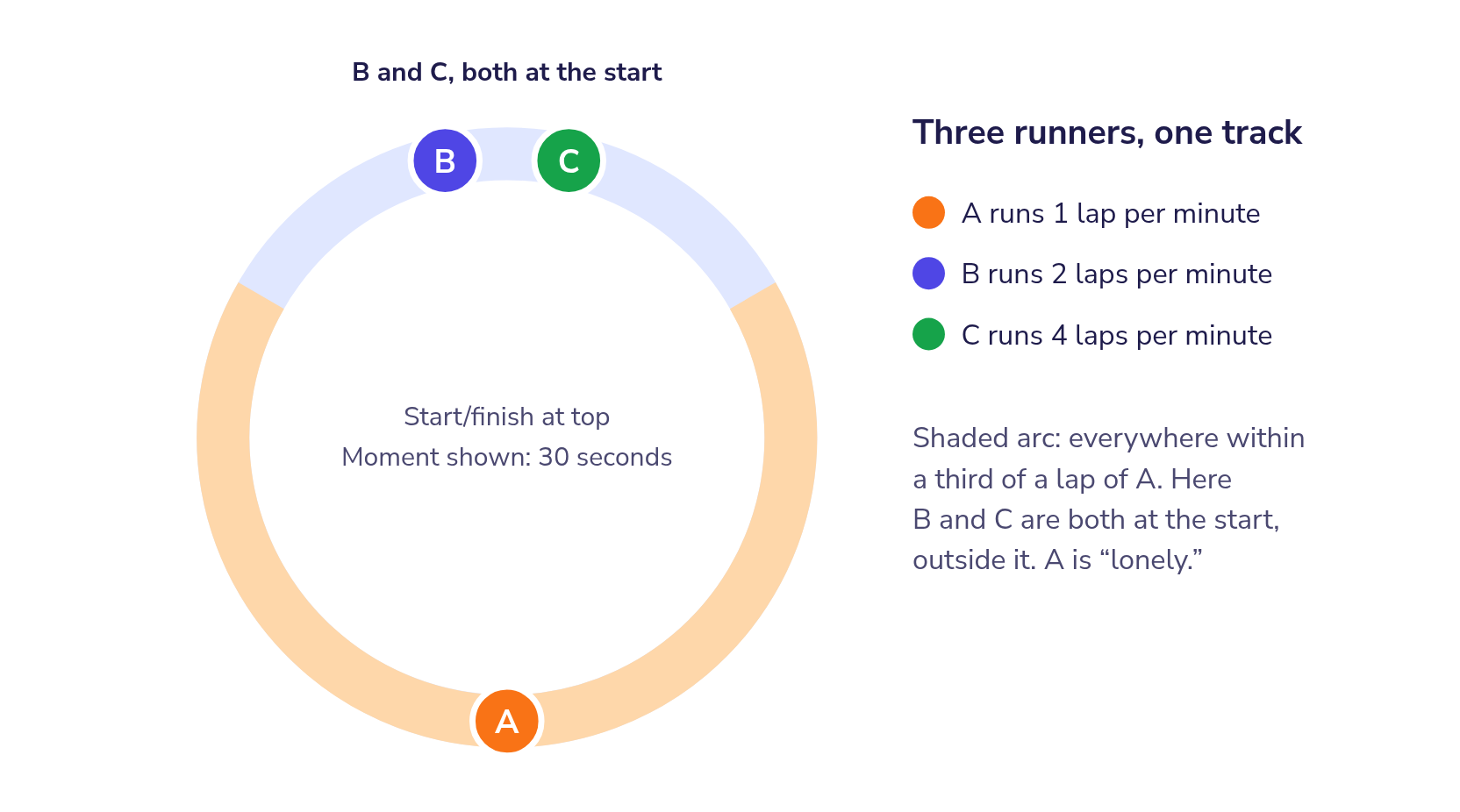
Lonely Runner Conjecture
Runners start together on a round track, at different speeds. Will each one, at some moment, be far from everyone else?
Ask your students
Act it out with three speeds. Freeze! Who's lonely?